After Years of Watching Dogs Shake Through New Year's Eve: The Simple 6-Week Plan That Lets Anxious Dogs Sleep Through the Fireworks…
Forget eggnog, sedation-only pills and "magic" calming treats. This surprisingly simple at-home method gently turns down the panic switch in your dog's brain, with no harsh drugs, a few minutes a day, and nothing your dog has to swallow.
Do you know that moment in the late afternoon, sometime between Christmas and New Year's?
You're in the kitchen making a cup of tea. Your dog is stretched out on his blanket, looking completely relaxed.
And then it happens. With no warning at all…
Three streets over, some teenagers set off the first firecracker of the season.
A dull, metallic BANG rips through the quiet winter evening.
In the same split second, your dog jolts up like he's been hit by lightning. His ears fold flat against his head. His pupils go wide and black.
His whole body starts to shake. Not a little shiver, but that deep, rattling tremble where his nails click on the floor and his chest heaves.
He pants fast with a dry, hanging tongue. He drools onto the hardwood. He scrambles past you, claws at your leg for a second, then bolts blindly down the hallway.
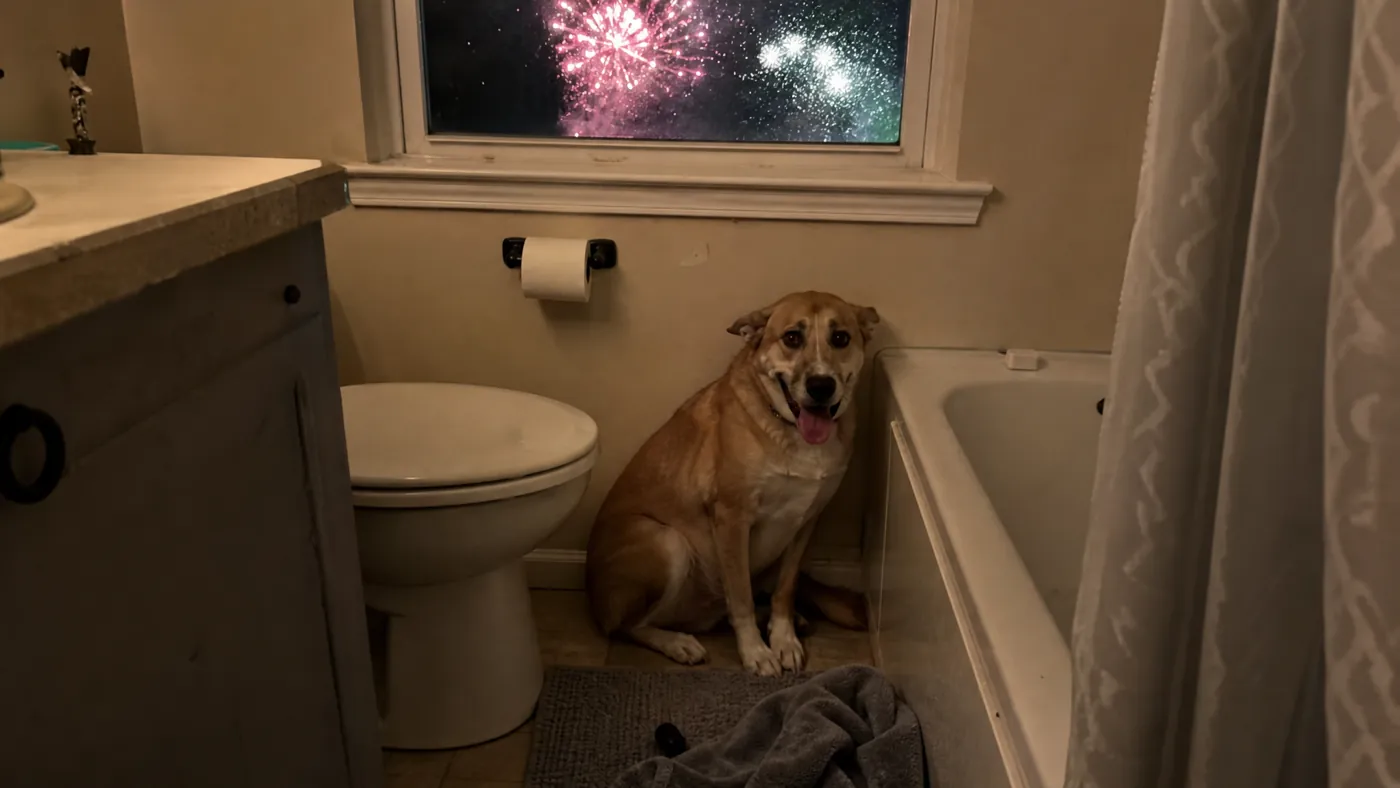
He's heading for the darkest, tightest spot in the house: the gap behind the toilet, the space under the bed, or the cold, empty bathtub.
He squeezes himself in, makes himself as small as he can and stares into nothing with huge, frightened eyes.
You kneel next to him on the cold tile, wrap your arms around him and whisper: "It's okay, sweetheart, I'm right here."
But nothing is okay.
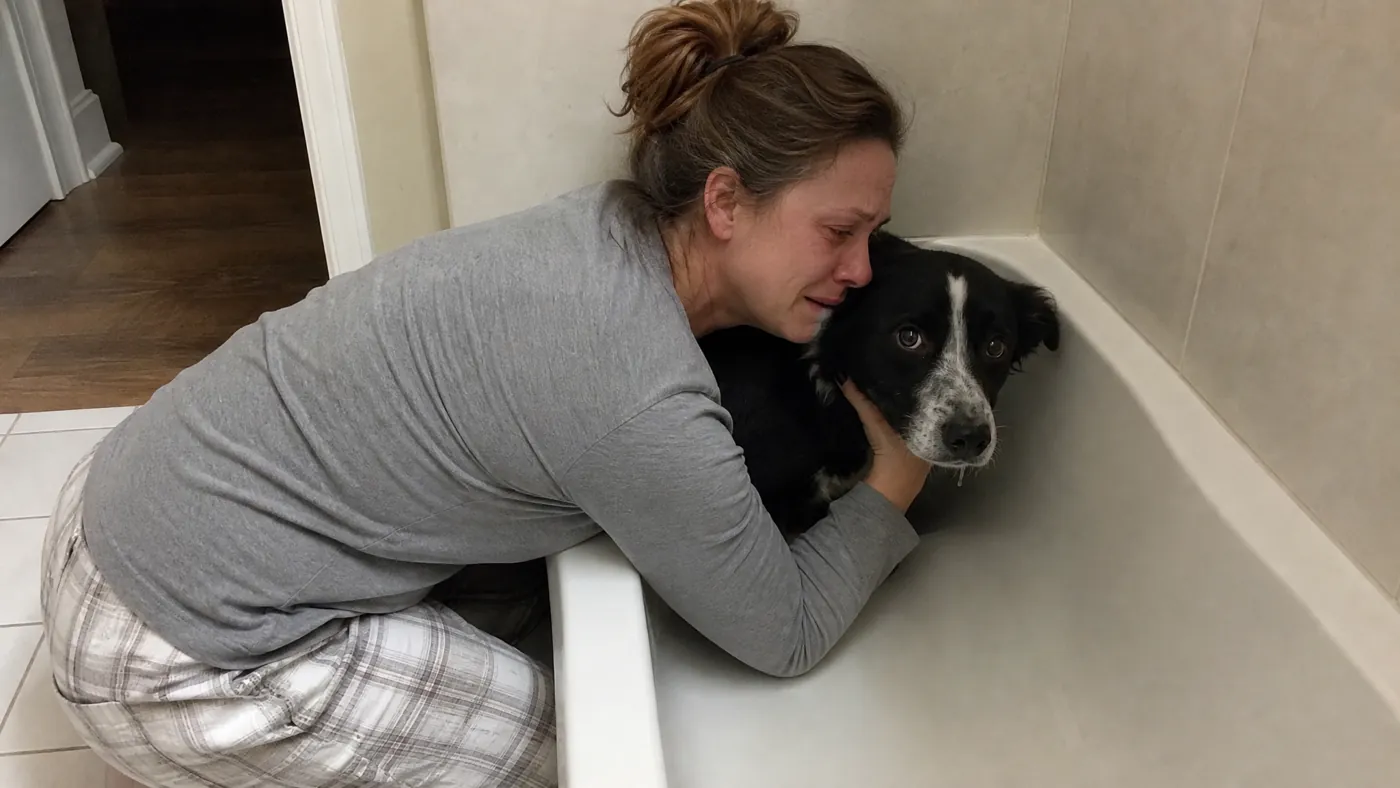
Your dog doesn't even hear your words. He barely feels your hand. He's stuck in a tunnel of pure fear, frozen, convinced something terrible is about to happen.
And right in that moment your throat tightens. Tears sting your eyes because you feel so powerless.
You feel awful. You feel helpless. And as you sit there on the bathroom floor you ask yourself: "Why can't I help him? What on earth is midnight on New Year's Eve going to look like if it's already this bad?"
Every year, starting in November, we hear this exact heartbreaking scene from dog owners over and over. Loving dog moms at the end of their rope, because they simply can't stand watching their dog suffer like this anymore.
So before anything else, we want to give you a message we hope you'll take to heart:
If your dog panics on New Year's Eve, please don't blame yourself. It is not your failure.
Your dog isn't being dramatic. And you haven't let him down.
A dog simply doesn't know that colorful rockets in the sky mean a party…
To a predator's ears that pick up sounds far higher, and from much farther away, than ours do, an exploding firecracker can mean only one thing: danger, right now.
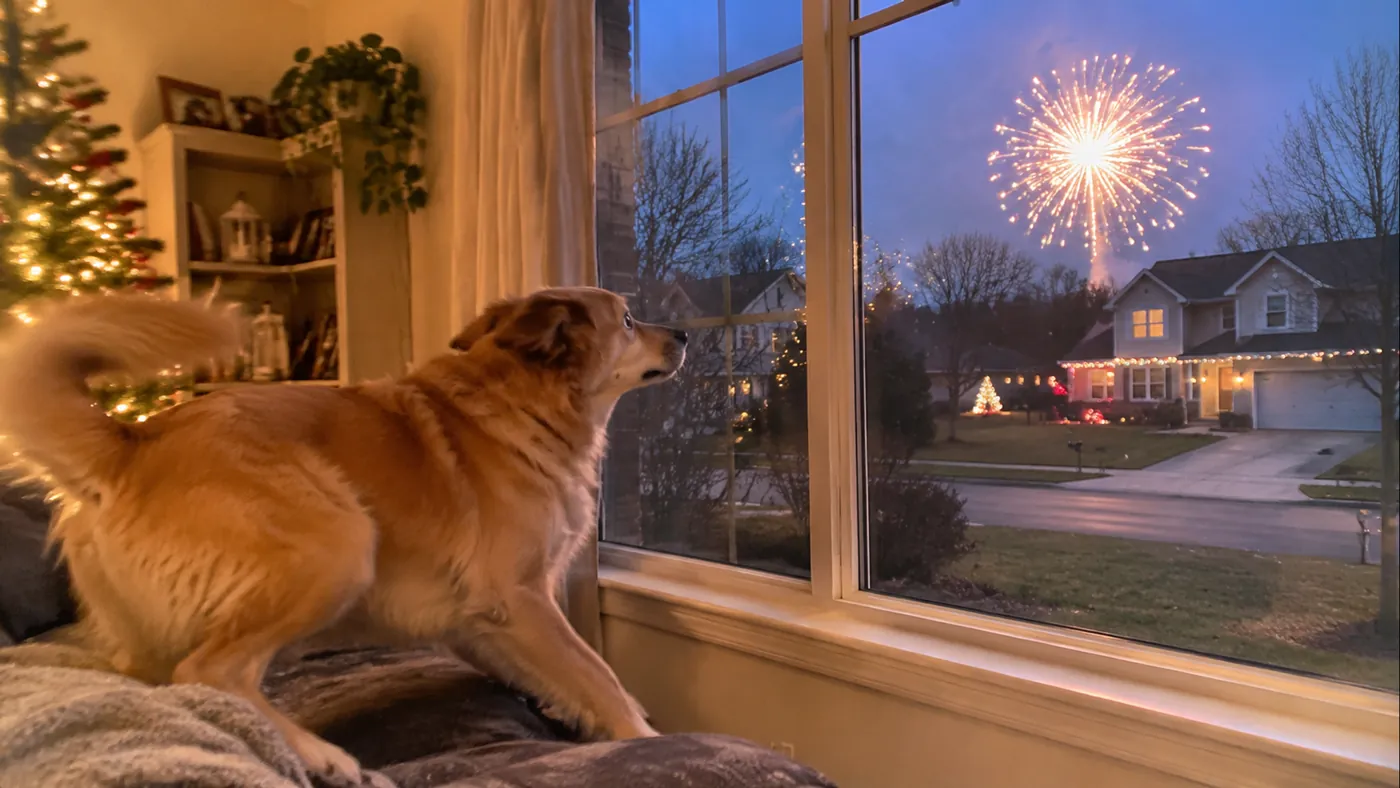
In that state, no sweet talk, no treats and no petting will get through. His brain has flipped the emergency switch.
But to understand why some dogs just lift their head at a bang while yours spirals into hours of panic, we need to look at how fear actually works…
Because the real problem isn't in your dog's ears. It's in a loop his brain has learned, and that loop gets stronger every single year…
- How to have the New Year's Eve you've wanted for years: finally ringing in the new year with a glass in your hand and your people on the couch while your dog dozes at your feet, instead of shaking in the shower.
- The hard truth about the most popular "quick fix": why some sedation-only drugs can quiet your dog's body without calming his fear, and why that can make next year worse.
- How to give your dog back the whole month of December: no more weeks of tension, sneaking around the yard and dreading the dark, just relaxed winter walks again.
- Forget eggnog, flower drops and viral calming chews! The simple reason most well-meant tricks fall apart on the big night, and the one lever that actually helps your dog's brain stop overreacting to noise.
- The gentle, 10-minutes-a-day routine that helps even very fearful rescue dogs get through the loudest fireworks calmly.
Knocked out but still terrified: why "just sedate him" can backfire
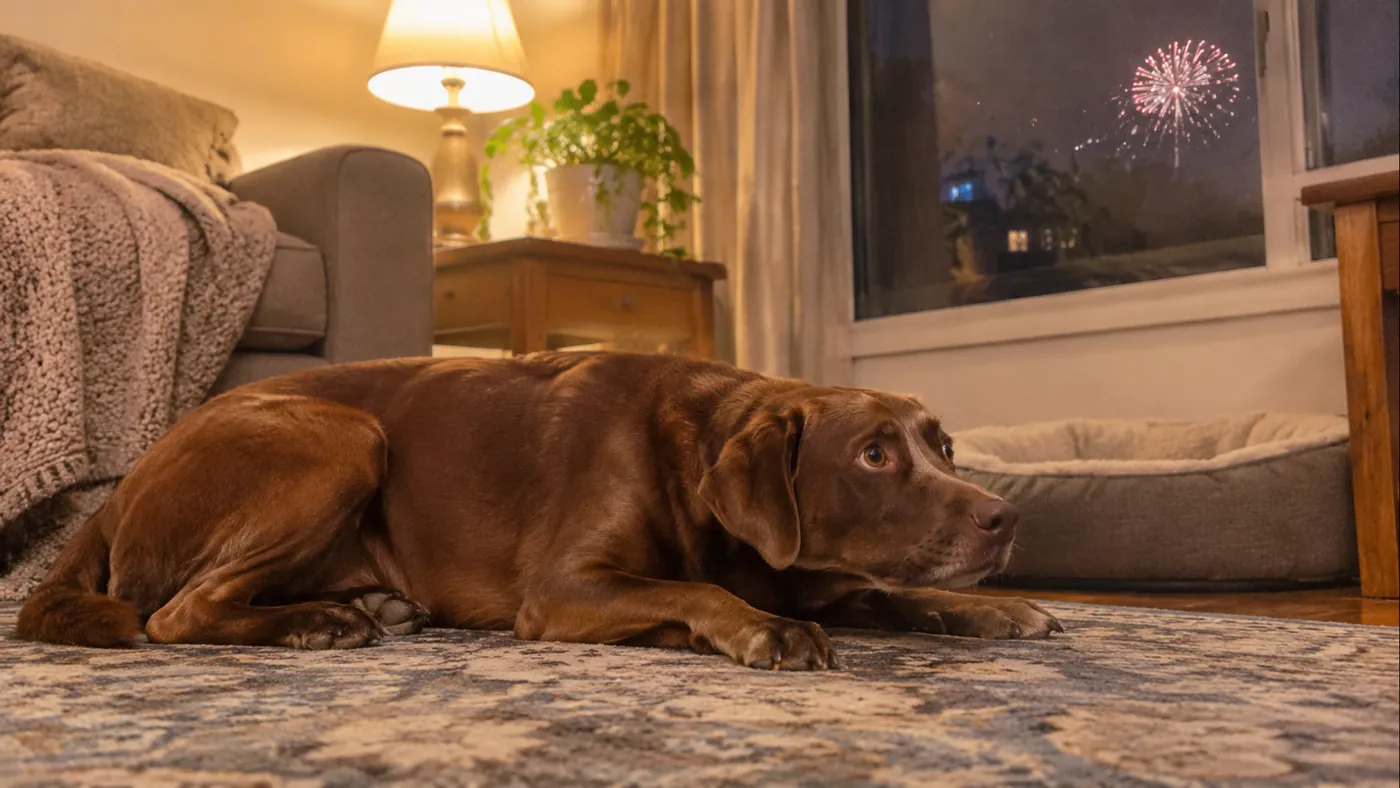
When the panic peaks in December, many worried owners go the route that feels safest: they ask for something strong to "knock him out."
And some still get an older sedative that only works on the body, like acepromazine given on its own.
At first it looks like a blessing: the dog gets the pill, turns heavy after half an hour, lies down in his bed and seems to sleep. He stops flinching. He stops running around the room.
To the owner, it looks like he's finally at peace.
But here's what many owners never hear…
A sedation-only drug can slow the body down without touching the fear itself.
In plain words: your dog may lie still on the rug because his muscles feel heavy, while his ears and the alarm center in his brain are still running at full speed.
He still hears every single bang. He still smells the smoke in the air. And inside, the fear can keep climbing.
He wants to jump up, hide, run to you, but his body won't cooperate.
That's why many veterinary behavior experts now advise against using a sedative alone for noise fears: a dog who goes through the scariest night of the year without being able to escape can come out of it even more afraid.
No wonder more and more owners say: "I don't want to just drug my dog." (If your dog needs medication, talk to your vet about anti-anxiety options made for noise fear, and pair them with a plan like the one below.)
Eggnog, flower drops and "calming" treats: why most tricks fizzle on the big night
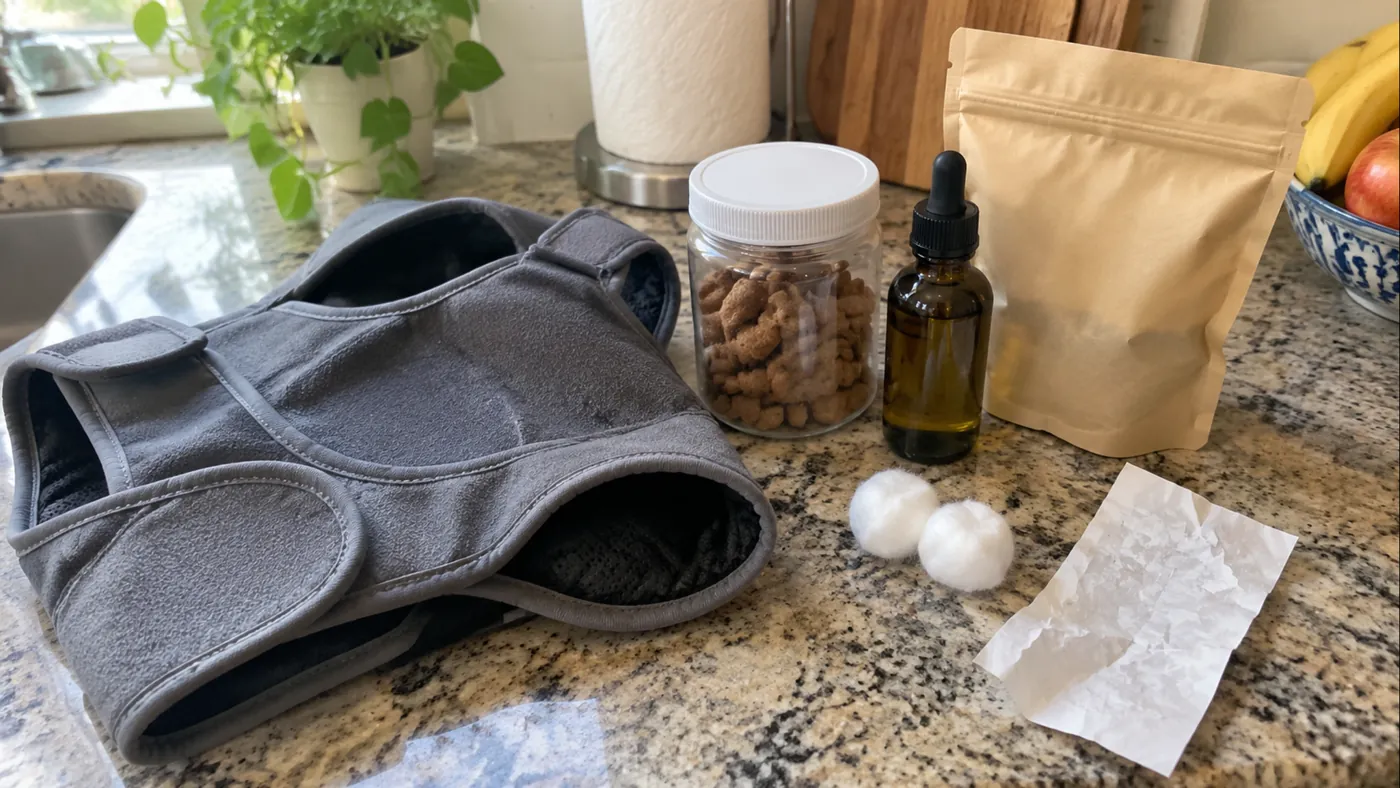
Out of fear of heavy drugs, a lot of dog owners turn to the tips they find in Facebook groups or from TV trainers.
Maybe you've tried some of these too:
❌ A splash of eggnog or beer: alcohol is toxic to dogs, even in small amounts. Getting a scared dog tipsy doesn't remove the fear, it just dulls his reactions, and it can be dangerous. Please never do this.
❌ Flower drops and "rescue" remedies: they mostly calm the owner's conscience. When your dog's body is flooded with stress, a few drops on the tongue don't stand a chance.
❌ CBD oils: research on noise fear is mixed, and some dogs actually get more restless instead of calmer.
❌ Anxiety wraps and snug vests: gentle pressure can help a mildly nervous dog. But once the windows start rattling, it often stops being enough, and he shakes right under the fabric.
And then there are the endless "relax" chews and calming treats from the pet store.
You buy a $40 tub, give them faithfully, and on December 31 your dog shakes exactly like last year.
Why do even products with soothing herbs printed on the label let you down?
Because they all try to fix the big night alone, and skip the one thing that actually changes how your dog's brain reacts.
Why the panic gets worse every year: the fear loop no one explains
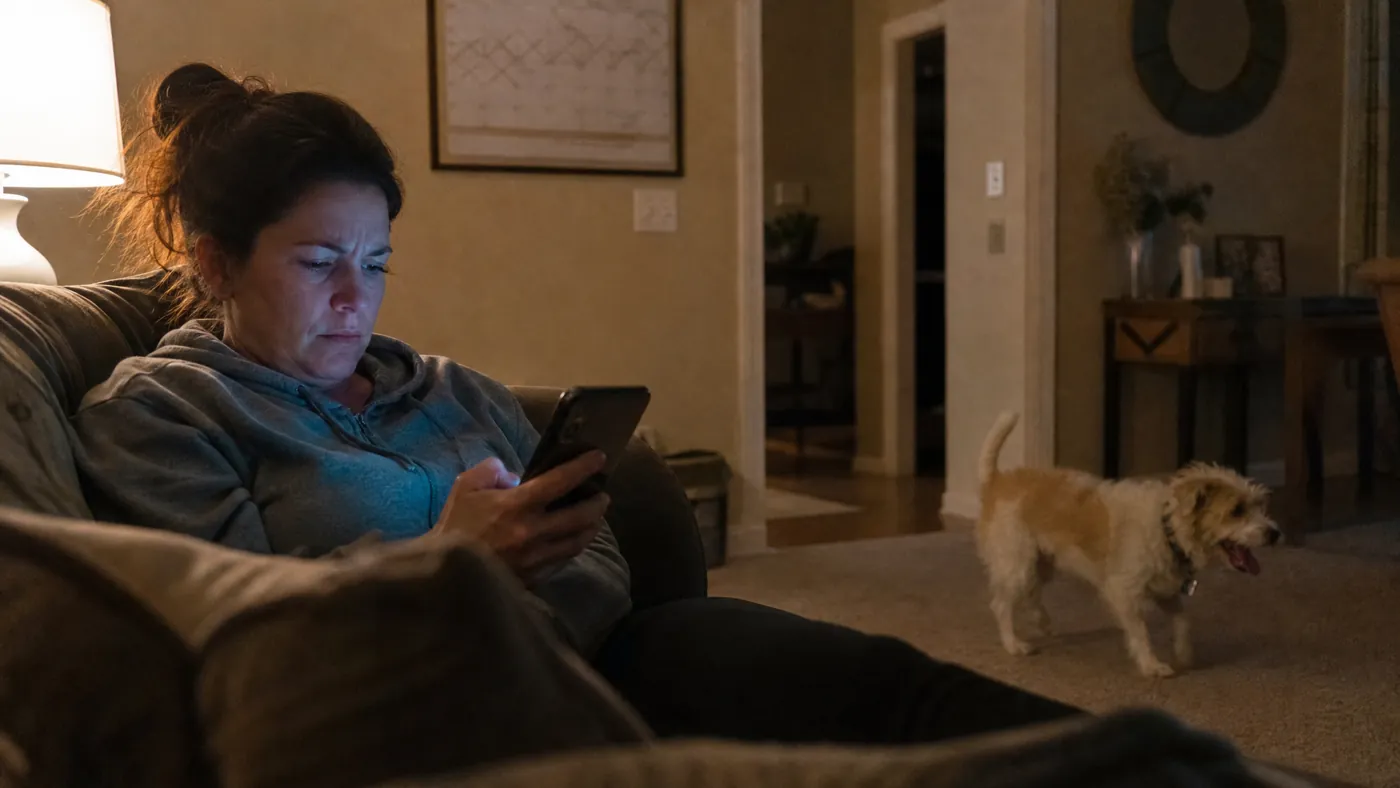
Here's what we wish every dog owner knew: calm isn't about obedience. It's about what your dog's brain has learned to expect.
Your dog's brain has a natural "noise filter." When it works, he hears a loud sound, files it under "harmless," and stays on his bed.
When that filter breaks down, every bang hits his alarm center like an electric shock.
And the filter is shaped by experience. Each time a sudden boom comes out of nowhere and your dog has no safe place, no warning and nothing good attached to it, his brain makes a note: "That sound means danger."
The next time, the alarm goes off faster. And louder.
That's why so many owners tell us: "He used to be a little nervous. Now he's terrified."
A dog who simply "gets through" each firework night without a plan isn't getting used to it. Very often, he's getting more sensitive.
Constant stress keeps the alarm switched on for days
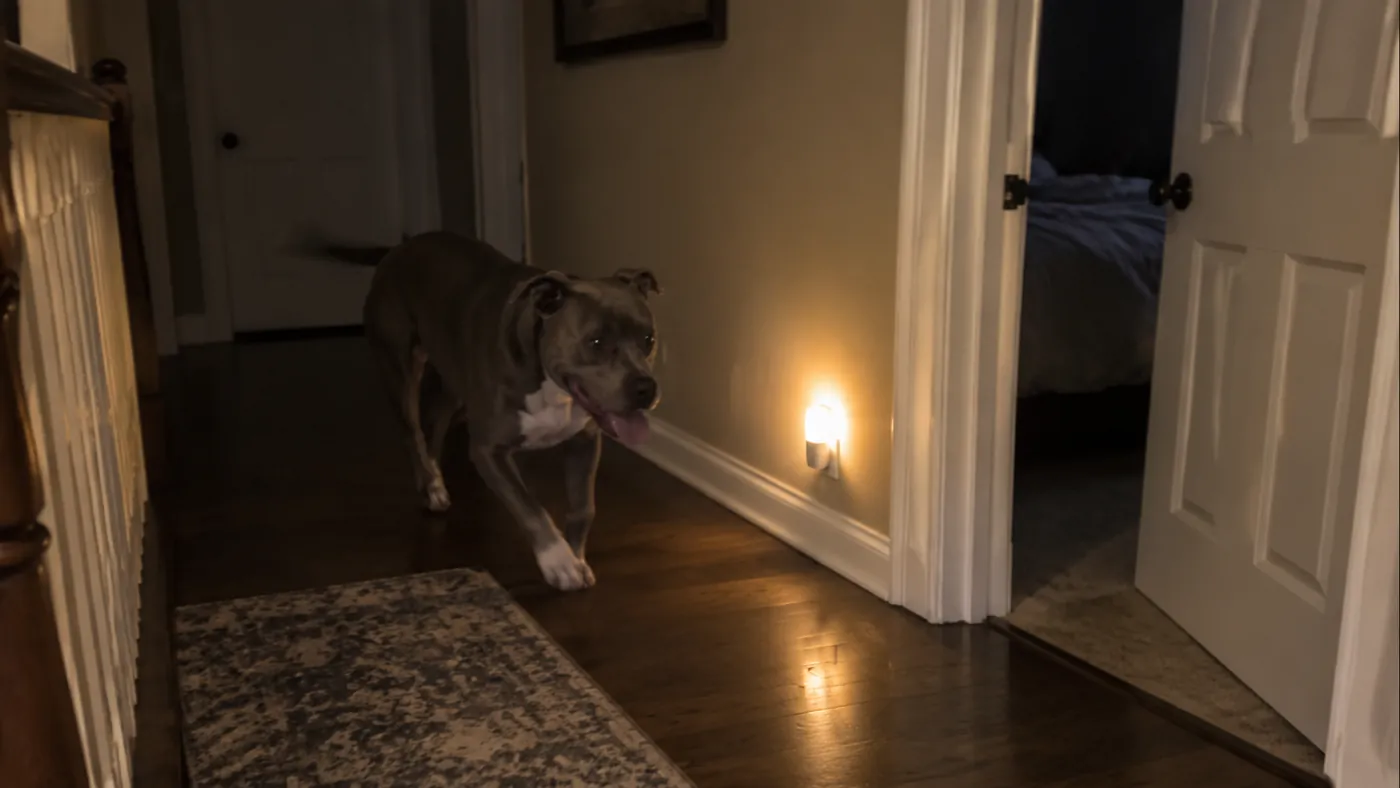
For a dog who's already tense, there's a second problem.
As soon as your dog gets scared, his body releases stress hormones like cortisol. They get him ready to run or hide.
But after a big scare, those hormones don't switch off right away. They can stay high for hours, sometimes days. So the next bang hits a brain that's already on edge.
- Your dog panics and his stress hormones spike.
- He has nowhere safe to go, so the fear has no exit.
- His body stays on high alert long after the noise stops.
- The next bang hits an already-primed nervous system.
- The panic gets bigger every time.
That's also why it's pointless to start on December 30…
After weeks of random bangs, the alarm is already wide open. A few drops or a vest five minutes before midnight can't undo that overnight.
Upset tummies and refusing to go outside: what weeks of fear do to your dog
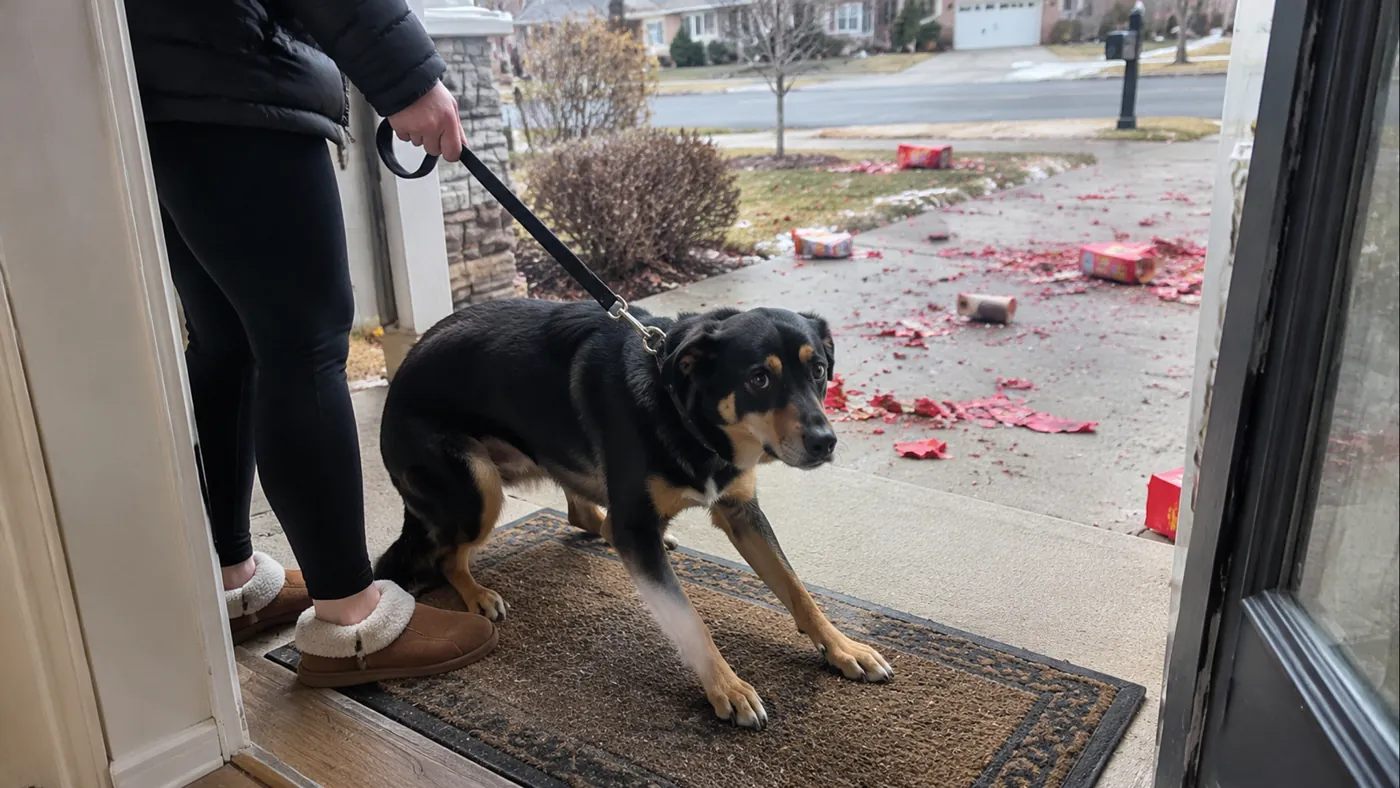
The stress doesn't stay on New Year's Eve. Here's what so many owners see in the weeks around it:
- Stress tummy: loose stools or an upset stomach the day after the bangs.
- Restless nights: he can't settle in the evening, keeps changing spots and pants even when it's quiet.
- Spreading fears: what started with fireworks slowly spreads to thunder, the vacuum or a slammed door.
- Refusing to go out: after a big scare many dogs won't step outside for days and hold their pee for hours.
Every scary night without a plan gets burned a little deeper into your dog's memory.
To break that loop, you have to work on two things at the same time: give the fear somewhere safe to go, and teach your dog's brain, little by little, that the bang is no big deal.
How the 3-Layer Calm Method breaks the loop
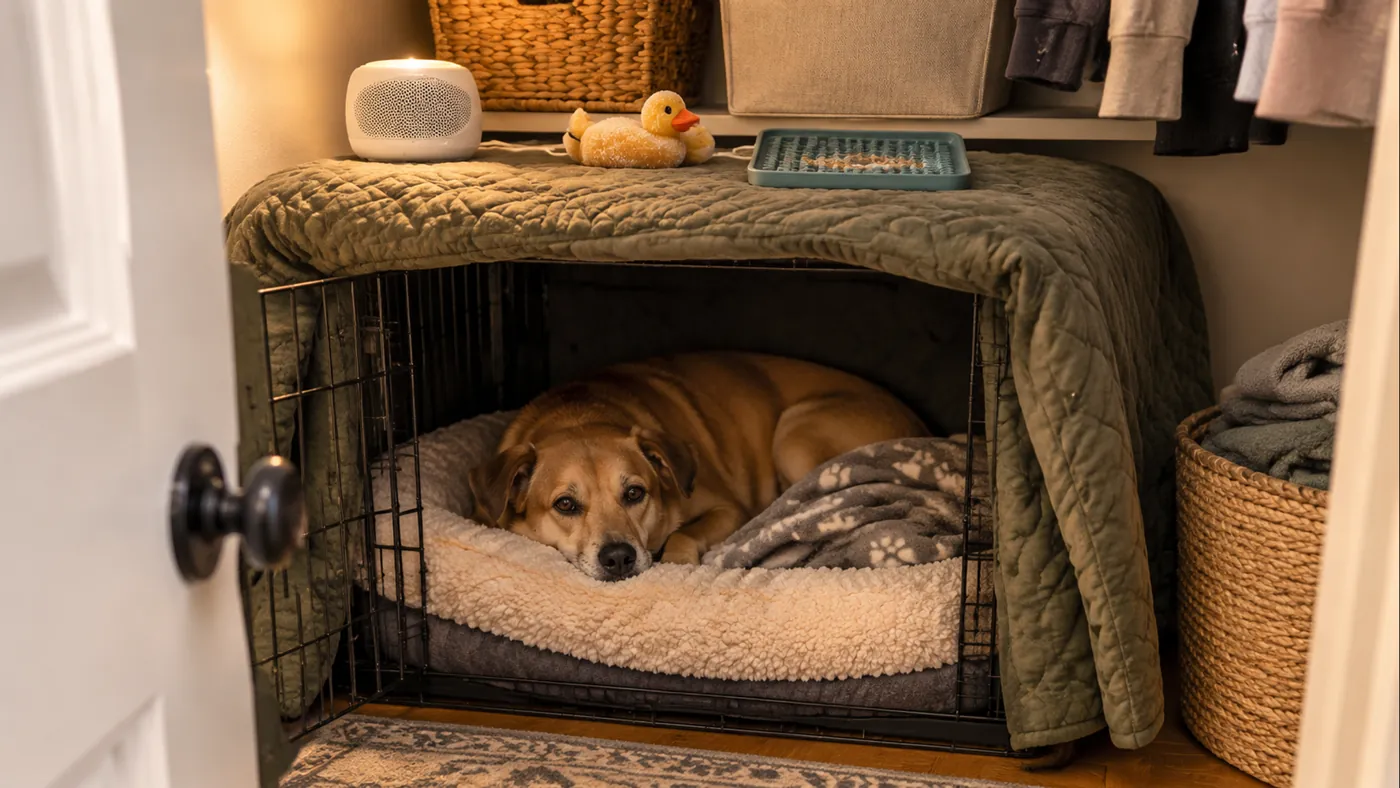
For your dog to feel calm when the sky explodes, the problem has to be solved where it starts.
That's exactly what the 3-Layer Calm Method does. It combines three simple layers:
1. A Safe Den that muffles the world
Instead of letting your dog pick the gap behind the toilet in a panic, you build him a den he already loves weeks before the big night: the right room, a covered crate or closet, blackout for the flashes, steady white noise to soften the booms and a familiar smell. When the first bang hits, he knows exactly where to go, and his fear has an exit.
2. The Sound Ladder: from "barely there" to "no big deal"
This is the heart of the plan. With graded firework recordings starting so quietly your dog barely notices, paired with his favorite food, you slowly raise the volume over the weeks. His brain learns a brand-new rule: "Bang means something good is coming." It's the same gentle approach that dog behavior professionals use for noise fears, broken down into 10-minute daily sessions anyone can do.
3. The Firework Night Protocol, hour by hour
On the big night itself you don't improvise. You know when to walk, when to feed, when to close the blinds, which chew or lick mat to hand over and when, how to act yourself (yes, you can comfort him) and what to do if he slips into panic. Your dog stays awake, aware and himself, just without the frantic shaking.
Why starting weeks ahead makes all the difference
Every layer of the plan has a clear job:
1. The Safe Den gives the fear an exit. A dog who can retreat to a quiet, dark, familiar place feels in control. Covering, white noise and blackout soften both the sound and the flashes, so each bang lands much softer.
2. The Sound Ladder rewires the reaction. Working below your dog's fear threshold and pairing the sound with something wonderful is called desensitization and counter-conditioning. It's widely recommended for noise fears because it changes the emotion, not just the behavior. But it takes repetition, which is why the plan starts 4 to 6 weeks before the big night.
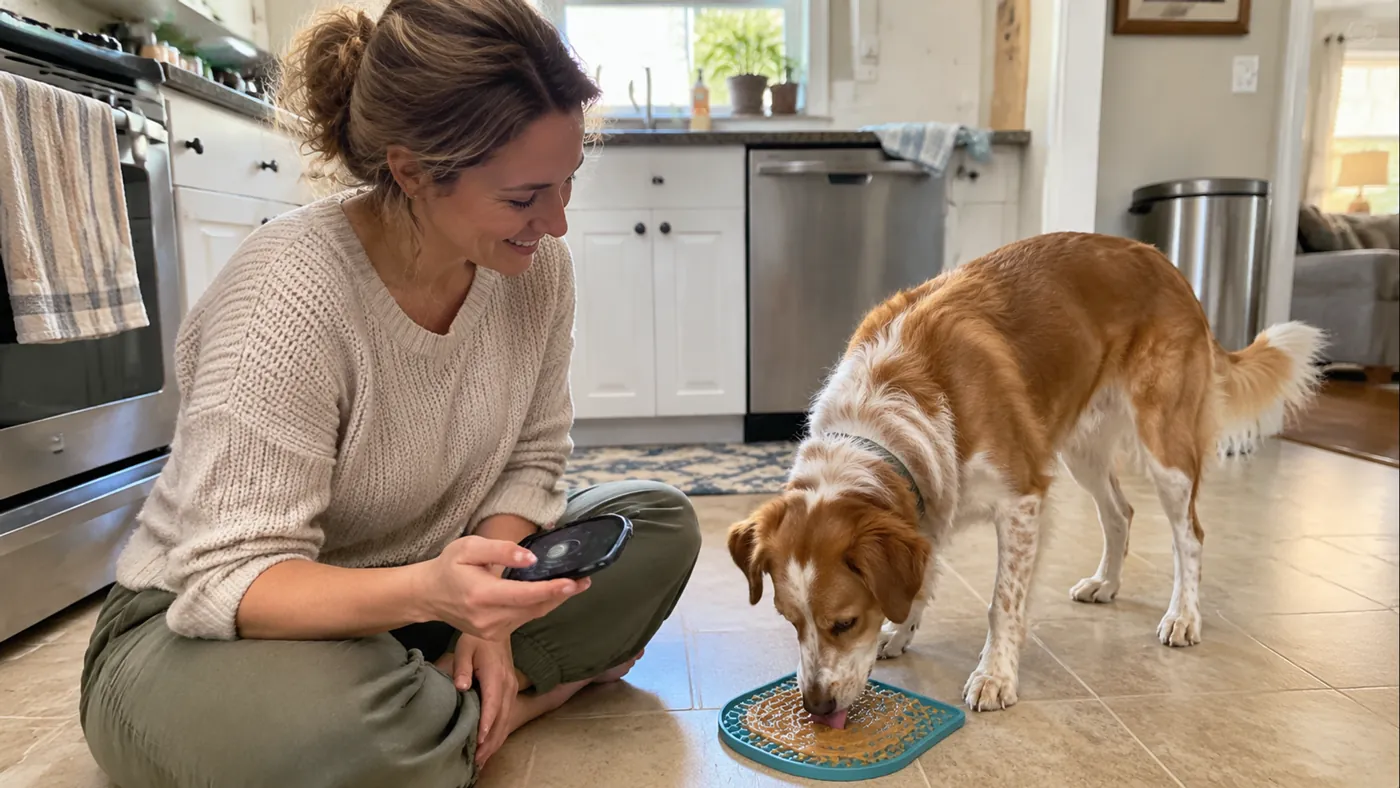
3. The Firework Night Protocol keeps stress from piling up. A long sniff walk before dark, a potty break before the first rockets, an early meal and a long-lasting lick mat or frozen chew help your dog stay calm. Licking and chewing are naturally soothing for dogs.
4. The aftercare keeps fear from spreading. The days after matter too: how to rebuild confidence on walks, reset the den and keep thunder or the vacuum from becoming the next trigger.
Why random YouTube firework videos and "just ignore him" advice can make things worse
At this point many smart dog owners think: "That makes sense. Can't I just play a fireworks video on YouTube and give him a treat?"
We have to be honest here. Done the wrong way, it can backfire:
- Too loud, too soon: most videos start at full blast. If your dog is scared during the session, you're not teaching him calm, you're rehearsing panic. The volume has to start almost inaudible and climb in tiny steps, and you need to know the signs that mean "go back a step."
- The "ignore him" myth: you may have heard that comforting a scared dog "rewards the fear." Modern behavior science doesn't support that. Calmly comforting your dog is fine, and the plan shows you how to do it in a way that actually helps.
- Random supplements without a plan: melatonin, calming chews and pheromone sprays are popular, but on their own they rarely hold up on the loudest night of the year. Always check any supplement or medication with your vet.
- Hiding spots that turn into traps: a den set up on the night itself, in the wrong room or with the door shut, can make a dog feel cornered. The den has to be built and loved weeks before.
The answer had to be gentle, simple enough to fit into a busy day, and laid out step by step, so you never have to guess.
The most complete, gentle plan we've found for firework-anxious dogs
For years we saw the same dilemma over and over…
Every October, dog owners whose dogs shook and panted at every bang were looking for help.
On one side, they didn't want to just knock their dog out and hope for the best.
On the other side, the vests, drops and calming chews kept failing them on the one night that mattered most.
So we brought everything that actually works for noise-anxious dogs together into one simple plan that combines two things: it had to be the gentlest possible approach, and the most effective one you can do at home to give your dog his calm back before and during the fireworks.
It's called Firework Calm Dog.
What is Firework Calm Dog?
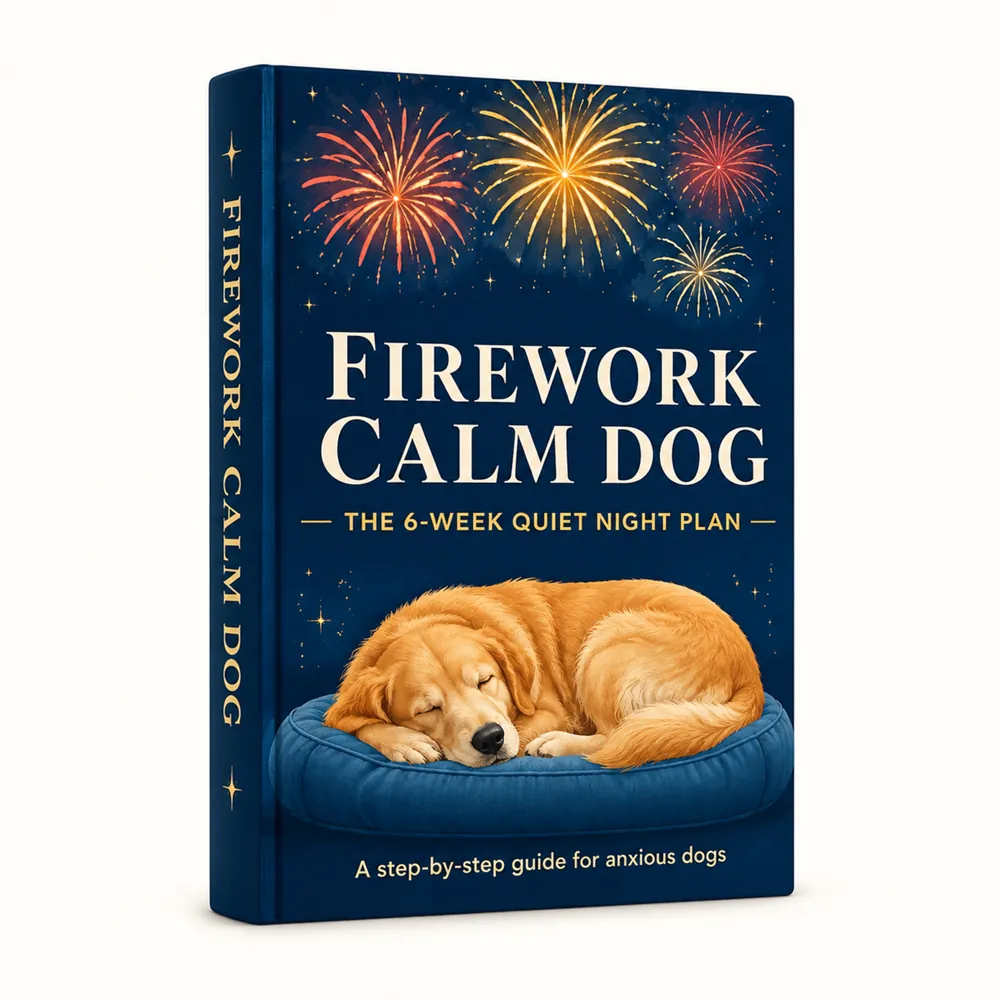
Firework Calm Dog is not another calming treat. It's a complete, step-by-step digital plan (instant access on your phone, tablet or computer) that sets a new standard in two key ways:
1. Gentle and safe for sensitive dogs
- No harsh drugs, nothing to swallow: the plan works with your dog's own learning, not against his body.
- Always below his fear threshold: every session is designed so your dog stays relaxed, with clear signs for when to slow down.
- Made for real homes: apartments, houses, kids, other pets, small budgets. Everything you need is probably already in your home.
2. Built to work on the big night
- The 6-Week Quiet Night Plan: a day-by-day calendar from today until New Year's Eve, 10 minutes a day.
- The Sound Ladder Audio Pack: 12 graded firework and thunder tracks, from barely audible to full show.
- The Safe Den Blueprint: how to choose the room and set up the den, blackout and white noise, step by step.
- The Firework Night Hour-by-Hour Checklist: a printable plan for December 31 and the Fourth of July.
- 30 Calm Lick-Mat & Frozen Chew Recipes: dog-safe recipes that keep him busy and soothed through the loudest hours.
That's why Firework Calm Dog is the plan we'd hand to any dog mom who dreads New Year's Eve, without a second thought. It respects how your dog's brain actually learns, it keeps him safe, and it gives you a clear plan for the night that matters most.
10 minutes a day, starting 4 to 6 weeks before: how to use it
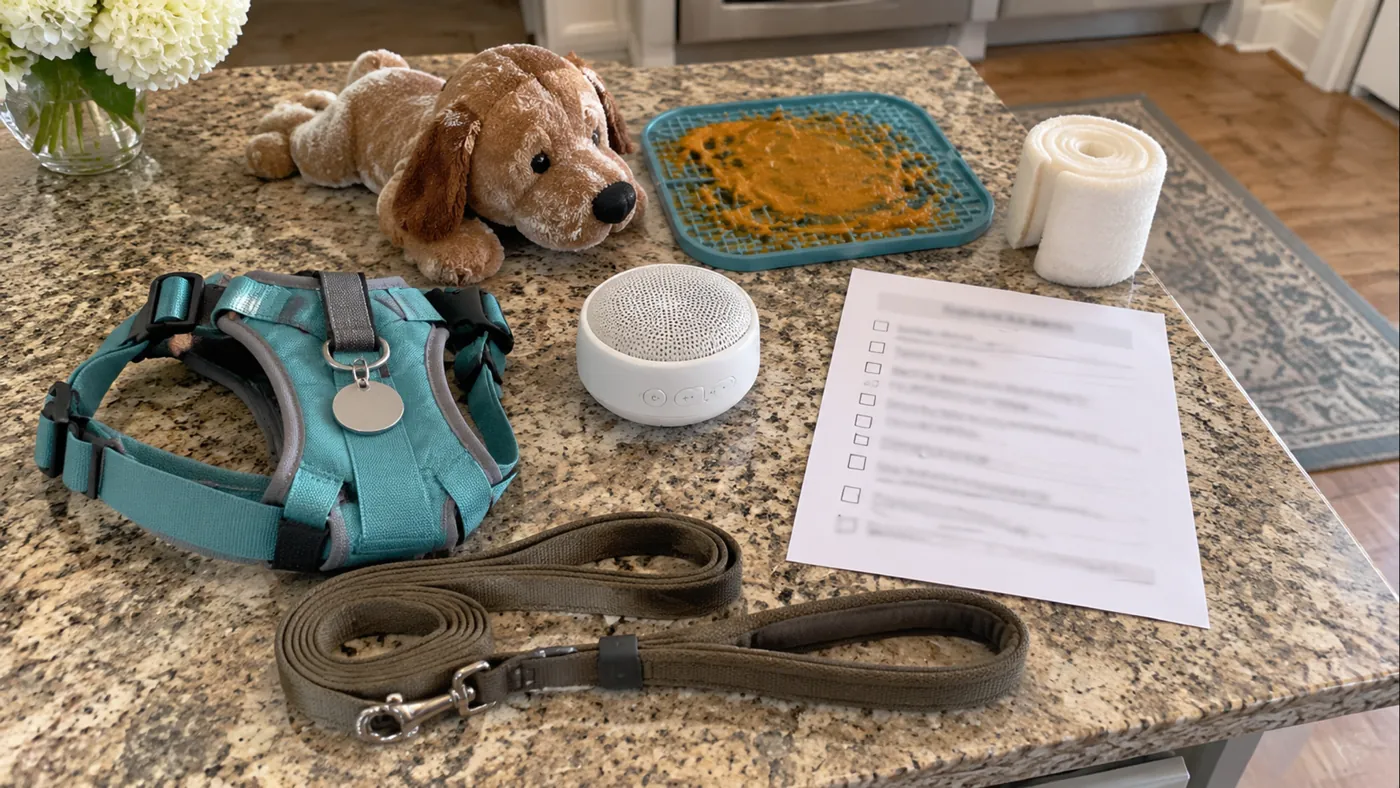
No complicated training sessions and no fighting to get a pill into his mouth. Firework Calm Dog takes about ten minutes a day:
- Set up the Safe Den this week: follow the Blueprint to pick the spot and make it his favorite place, with meals and chews there so he goes in on his own.
- Play one Sound Ladder session a day: press play on today's track at the volume the calendar shows, during a meal or a lick mat. If he stays relaxed, you move up a step. If not, you stay. That's it.
- Follow the Firework Night Protocol on December 31: the hour-by-hour checklist tells you when to walk, feed, close the blinds, start the white noise and hand over the frozen chew, before the first rockets go up.
And it works just the same for the Fourth of July, thunderstorm season and every noisy holiday after that.
What happens when you follow the plan until New Year's Eve
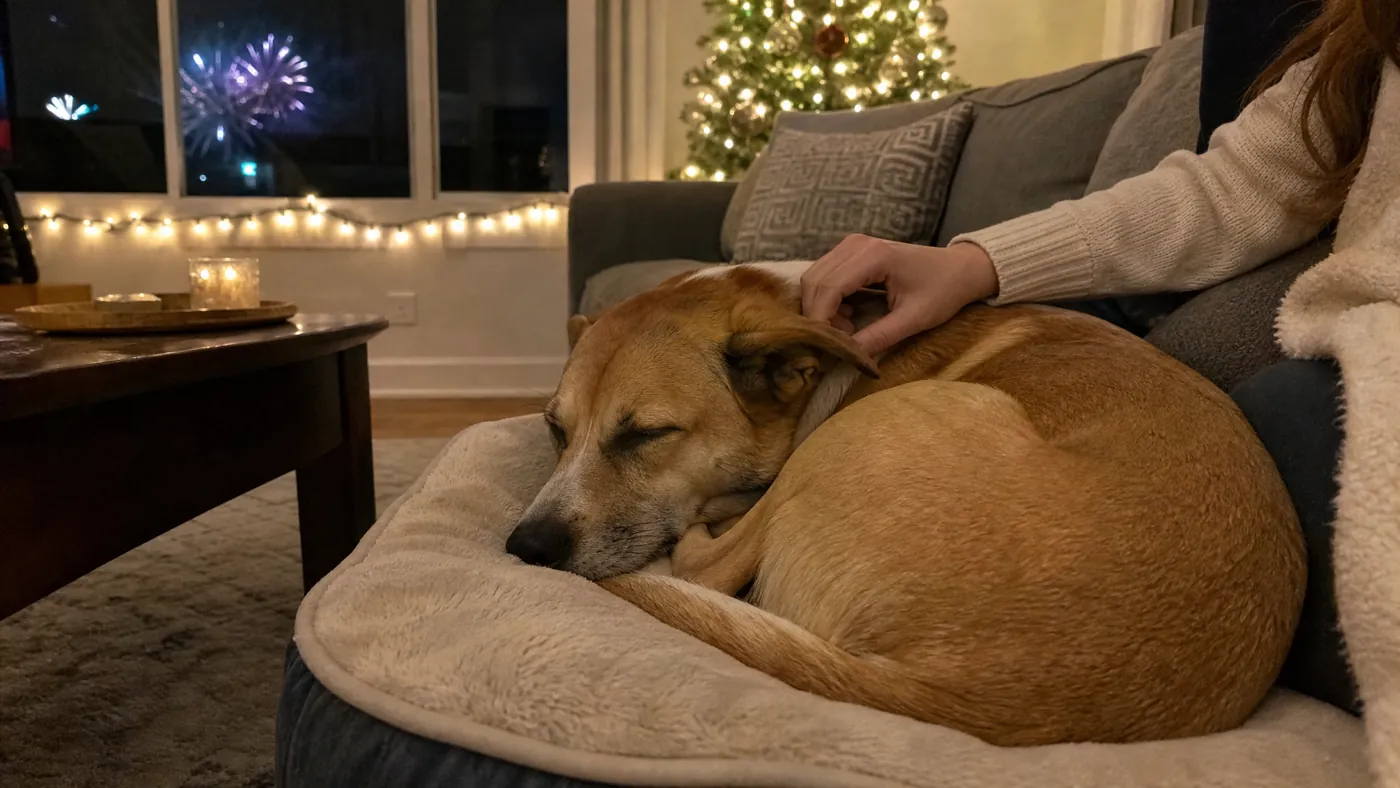
A dog's nervous system can't be reprogrammed in two hours by a miracle product. Real calm builds step by step:
Phase 1 (Week 1): First signs of calm at home
Your dog discovers his Safe Den and starts going there on his own. The first Sound Ladder tracks are so quiet he barely notices them, and he starts to look forward to "sound time" because it always comes with something delicious.
Phase 2 (Weeks 2 to 3): The noise filter starts working again
The volume climbs, step by step. When the first early firecrackers go off in the neighborhood in December, many owners notice a new reaction: their dog lifts his head, looks at them, and settles back down instead of bolting. He stays reachable and takes your calming cues.
Phase 3 (Weeks 4 to 6 / the New Year's Eve goal): The calm night
When the rockets whistle and the booms roll on New Year's Eve, you're not improvising anymore. Your dog goes to his den, works on his frozen chew and stays with you instead of fleeing behind the bathtub. And on New Year's morning he waits at the door, rested, ready for a normal walk.
Get the complete Firework Calm Dog plan today for just $27 (risk-free with our 7-day money-back guarantee)
Everything you get today:
- Firework Calm Dog: The 6-Week Quiet Night Plan$97
- Bonus 1: Sound Ladder Audio Pack (12 tracks)$67
- Bonus 2: The Safe Den Blueprint$47
- Bonus 3: Firework Night Hour-by-Hour Checklist$37
- Bonus 4: 30 Calm Lick-Mat & Frozen Chew Recipes$49
Digital guide + audio · Nothing ships · Lifetime access
Because the calm-building part of the plan takes about 4 to 6 weeks, the best time to start is today, so you have every step done before New Year's Eve.
And because we want you to be able to give your dog the calmest, quietest New Year's Eve possible…
…we put together a launch price just for readers of this article: instead of $297, you get the complete plan with all four bonuses for a one-time $27.
Try it risk-free with our 7-day money-back guarantee
Read the plan, set up the den and try the first sessions. If you're not happy with it for any reason, just email us within 7 days and you get 100% of your money back. No questions, no hassle, and you keep what you downloaded.
"Milo spent last New Year's wedged behind our toilet for four hours. This year I built the den in our laundry room in week one and did the sound tracks with his breakfast. When the neighbors started at 9, he went in on his own and chewed his frozen Kong."

"I honestly thought Rosie was too old to change. She's 9. The Sound Ladder went slower than the calendar for her, and the guide tells you that's fine. By the Fourth of July she stayed on the couch with me. She still flinched at the big ones, but no drooling, no shaking."

"I foster, so I get the scared ones. The hour-by-hour checklist is taped inside my pantry door now. Walk before dark, early dinner, blinds down, white noise on, lick mat out. Our foster poodle mix slept through most of the show in the den."

"My vet told me sedation alone wasn't the answer for Buddy and that I needed a plan to go with it. This was the plan. Six weeks of ten minutes a day. The first year in a long time I watched the fireworks from my window instead of the bathroom floor."

Why smart dog owners start now, before December fills up
Reading the guide in one evening already shows you why your dog reacts the way he does, and what to change in your home tonight.
But to really calm an overloaded nervous system, the Sound Ladder needs a few weeks of short, steady sessions. That's why we recommend starting at least 4 to 6 weeks before the big night.
If you start in mid-December, you're cutting it close, and the early firecrackers will already be going off in your neighborhood.
With the complete plan you guide your dog step by step through the rest of fall, through the random bangs of December, through New Year's Eve itself, and calmly into the new year. And you have it ready again for the Fourth of July.
Tap the button below, get instant access and give your dog the calm he deserves this New Year's Eve:
Finally ring in the New Year with the people you love while your dog naps at your feet
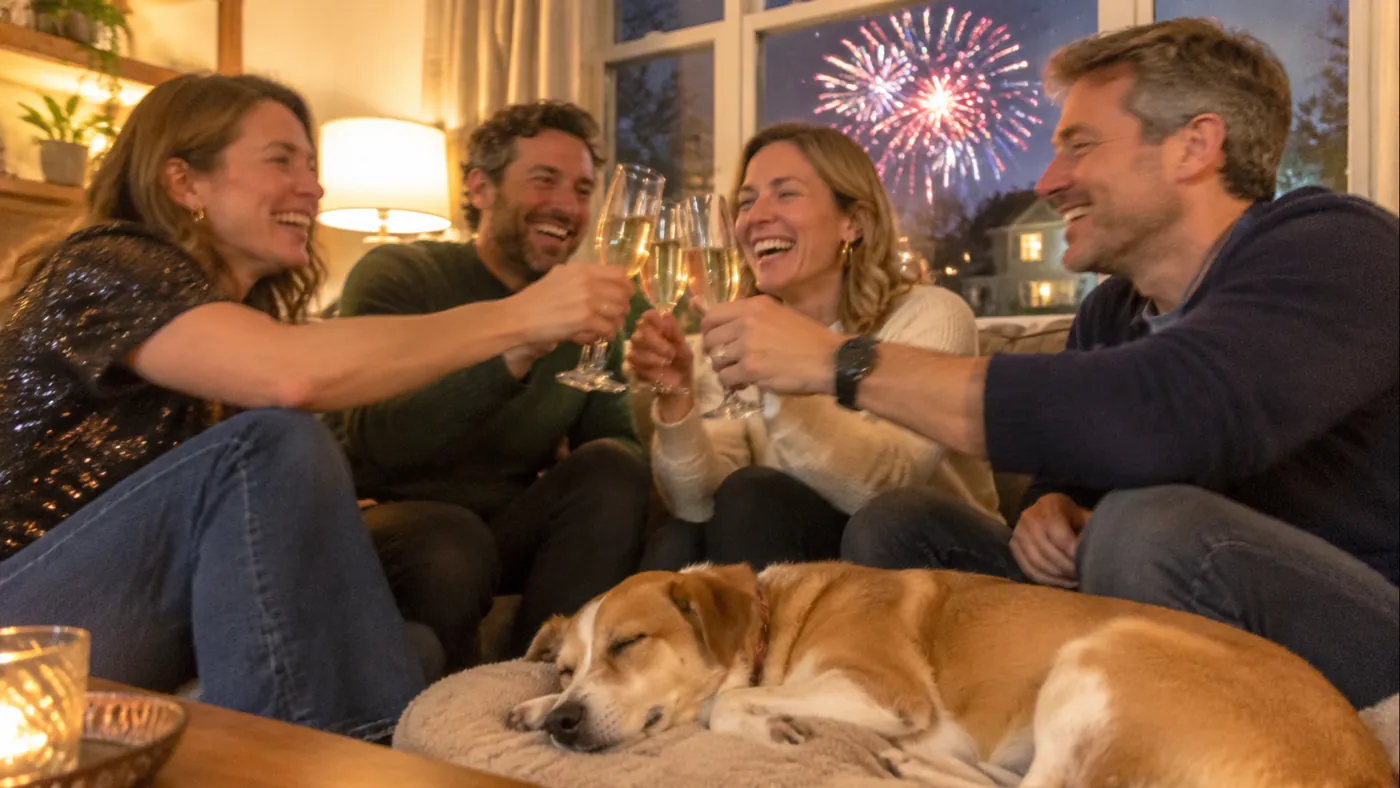
Picture this coming December 31.
Five minutes to midnight. Outside, the first colorful rockets go up and the sky over the rooftops lights up again and again.
This time you're not sitting on the cold bathroom floor in tears. You're on your couch in the living room, a glass in your hand, your family and friends around you.
At your feet, your dog is curled up on his soft cushion. His breathing is slow and even.
When an extra-loud boom goes off outside, he lifts his head for a second, feels the relaxed mood in the room, rolls over and drifts back to sleep. You scratch him gently behind the ears and feel how soft and loose his body is.
No shaking down to the bone. No foamy drool on the floor. No scratched-up doors.
Just peaceful relief, and knowing deep down that you helped your best friend. After all those anxious years, you both deserve this.